Content

Showing posts with label SouthEast Asia. Show all posts

Location: Wat Pho, Bangkok, Thailand (13� 44' 47? N, 100� 29' 37? E)
Date: 24 June 2010, 1.15pm
Camera: Canon 400D with Canon 70-200/f4.0

Bangkok is a city with lots of attractions- enough to keep a tourist busy for 3-5 days, if one is not sick of wats (temples) yet. On top of the wat-hopping, One can go crazy shopping at the various cheap shopping centres in Pratunam etc as well as the numerous nights markets and the giant Chatuchak weekend market. Currently Thailand is facing a bit of a lull period as there are uncertainties and hence, anxieties of tourists travelling to Thailand resulting from the election. That is all past and hopefully, things will return to normal for the �Land of Smiles� and keep the people smiling.

One of my favourite wat in Bangkok is Wat Pho. Not only that it has a huge and majestic reclining Buddha, there are also a few Thai chedis decorated with flower motifs and Thai mythical creatures in tiles (pictured). These are really attractive. Furthermore if one is tired of the walking, there is a massage school within the compound that provide massage services.

Read more »

Location: Bukit Timah KTM Railway Station, Singapore (1� 20' 3? N, 103� 46' 52? E)
Date: 29 June 2011, 5.35pm
Camera: Canon 400D with Sigma 17-70/f2.8-4.5

Most independent travellers to Malaysia who have been to destinations other than the main cities would have take a ride or two on Malaysia� railway run by KTM. In fact most travellers traveling to Singapore from Malaysia would have taken the train ride into the city-state because of its convenience- the journey terminates right at the Tanjong Pagar Station in the heart of the city, at the edge of the Central Business District (CBD). Well, that is no more as the two countries implemented a landmark agreement that resulted in the moving of the terminus station to right at the border between the two countries. As a result, rail travellers will find it less convenient to get to the city from the new terminus station. Alongside the ending of the KTM route within Singapore is the discontinuance of a couple of old-world railway operations that were still practised in Singapore by KTM. This includes the exchange of key token (as pictured) between the train driver and station master, bestowing the authority to the train to enter into the next sector of the railway track. This is a safety measure designed to prevent head-on collisions as the entire route is on a single track. On top of this is the disappearance of the manually operated signalling system.

Read more »

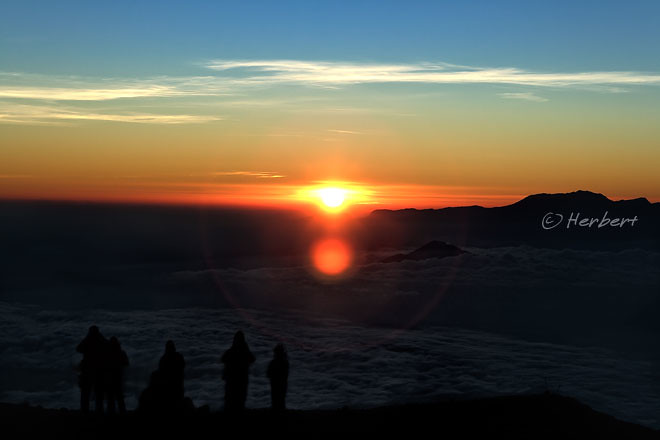
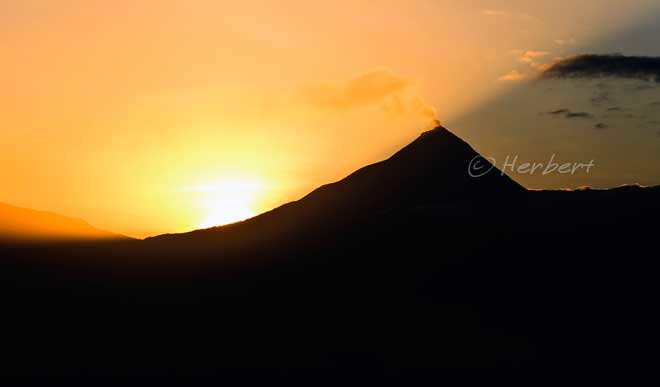
Location: Bromo-Tengger-Semeru National Park , East Java, Indonesia (7�45'8?S, 110�29'30?E)
Date: 25 December 1995; 5.50am

Camera: (analogue) Canon EOS 500N on negatives and scanned.

One of the most popular tourist destination on Java island Indonesia, has to be the Bromo-Tengger-Semeru National Park. The National Park offers great experience of proximity and view of a couple of mighty volcanoes, including the highest mountain, Mount Semeru, of Java. For the more energetic and adventurous (and I really mean adventurous) the National Park also offers an up-close-and personal encounter of the regular eruptions at the summit of Mount Semeru as well as an experience of standing above the clouds to enjoy a majestic sunrise view. Yet one can still enjoy a more laid-back, albeit early-rise and unforgettable Indonesia sunrise over the volcanoes from Gunung Penanjakan. However don�t forget your woollies- it is very cold at the mountainside at that time in the morning.

Read more »

Location: Lake Inle at Nyaung Shwe, Myanmar (20�39'N 96�56'E)
Date: 18 December 2000; 5.15pm
Canon EOS 500N (analogue) on slides and scanned

Water transportation is the major means for people living around Lake Inle to get around. While today there are motorised and speedboats, most people still get around by rowing their boats. Lake Inle�s local residents are well-known for their unique technique of leg rowing. Standing up on one leg in the narrow stern of the boat, they wraps the other leg around an oar and, with a circular movement, propels his boat forward. This "leg rowing" gives them a better view of the waterways and makes it easier to navigate around the floating islands and water hyacinth which make the margins of the lake into a maze of passageways. This is especially useful for fisherman on the lake as the lake is covered by reeds and floating plants which makes it difficult to see above them while sitting. Standing provides the rower with a view beyond the reeds. leg rowing is only practiced by men; women rows by sitting cross legged at the stern and use only their hands to row.

Read more »

Location: Ben Thanh Market, Hi Chi Minh, Vietnam (10� 46' 23? N, 106� 41' 54? E)
Date: 20 May 2010, 9.15am
Camera: Canon 400D with Sigma 17-70/f2.8-4.5

There are not too many things to do in a big city, when one is traveling. Normally cities just serve as a transit point for transportation around the country or in/out of the country. Similarly I did not find Ho Chi Minh (HCM) interesting. If I follow the guidebooks� recommendations, I will be visiting pagodas in HCM (see this post). However as in most Asian countries, there are 2 major attractions in cities like HCM- shopping and food. Well, what I meant by shopping is shopping for cheap-priced stuff, not the branded ones. Shopping-wise, it cannot compare to China but it has good interesting bargains and some products are unique and of better quality than those found in China.

Food-wise, Vietnam has a few unique dishes and delicacies. Vietnamese food generally is healthy, with lots of vegetables and less oil than the average Asian fares. No one can visit Vietnam without eating pho, the Vietnamese rice noodles- they are everywhere and in every meals. Pretty soon one gets sick of another bowl of pho, no matter how delicious it may be. Another Vietnamese dish that is present everywhere is gui cuon, which is a roll consisting of pork, shrimps, vermicelli and other ingredients wrapped in a clear rice paper. Gui cuon, which is also popularly known as Vietnamese summer roll, is like a spring roll except that is not fried and very fresh tasting. One of the better tasting gui cuon I had was in the food area of HCM�s biggest market, Ben Thanh Market.

Read more »

Location: At the summit of Mount Semeru, Indonesia (7�59'7.19"S 112�59'9.64"E)
Date: 18 July 2008; 6.15am
Camera: Canon 400D with Sigma 17-70/f2.8-4.5

One of the reasons people trek up to mountains is to enjoy the fabulous scenery and amazing sunset or sunrise. Mount Semeru is one of those places, as it is the highest mountain in Java. The sunrise at the top the peak is stupendous as one is virtually above the cloud covers. Often, depending on the direction of the sun, one can see his/her own shadow being casts on the clouds floating below them. Of course, one of the added excitement to trek up to the peak of Mount Semeru is the challenge (not easy to climb a volcano due to the deep ashes) and the adventure of standing beside a constantly-erupting active volcano. In fact lately it has been so actively erupting that the relevant authorities has banned any trekking to its summit.

Read more »

Location: Wat Pho, Bangkok, Thailand (13� 44' 47? N, 100� 29' 37? E)
Date: 24 June 2010, 1.35pm
Camera: Canon 400D with Canon 70-200/f4.0

One of the things I dislike about reading guidebooks such as Lonely Plant and Rough Guides is that they seem to always focus on one element of the places that they wrote about. If you read the book on Vietnam, the pages are filled with Pagoda this, Pagoda that and when one come to Thailand (apart from the islands), it is this Wat and that Wat. I guessed the guidebooks are written for a certain audience and that audience is people like me. I would be much more excited to read about things that are unique and local- sights and things that locals do- such as this article about Singapore. I do not suggest that it is inappropriate or irrelevant to focus on highlights such as local places of worship & endearment, it�s just that the average independent tourist- the target of such guidebooks- is more keen on discovering local going-ons than knowing where ALL the pagodas, wats etc are.

Read more »

Location : Bac Ha Sunday Market, Vietnam (22� 33' 0 N 104� 16' 0 E)
Date : 5 June 2005; 9.20am
Camera : Canon 300D with Sigma 70-200/f2.8

I always try to visit the local markets wherever I travelled to. One reason for doing so is to satisfy my stomach as quite often the market is where one finds most of the unique local snacks and food at very cheap prices. It is also a good place to see and understand what the local people eats, what�s special fresh produce for the region and so on. However one of the major reasons I visit such markets especially the all-important weekly (or whatever regularity) market/bazaar is to mingle and see the ethnic people in their traditional costumes. In most of the remoter places, there are no regular morning market but only once on a certain day of the week or month. During this day, people who lives in the nearby villages will congregate here to buy, sell, eat, gossip and meet up with friends. And ethnic people in remote places also normally still wears their traditional costume every day. So whether the Yi�s of Yunnan, Uighurs of Xinjiang or Kashmiris Muslims, Market Day is an important date in their weekly or monthly routine.

Read more »

Location: Luang Prabang, Laos (19� 53' 0? N, 102� 8' 0? E)
Date: 5 November 2004; 11.20am
Camera: Canon EOS 300D with kit lens

I have a fascination of the door art of different cultures and traditions. Each has rather different emphasis of what their doors should look like or its significance. Hence, the Chinese uses the door as both protective as well as wealth symbolism. To Tibetans, doors are very much a functional item for protection against the harsh weather conditions. And for many Indo-Chinese cultures, the door decorations/carvings are a demonstration of their wealth. Often their doors are exquisitely craved and gilded in gold. The doors of the royal families are normally a piece of exquisite art itself such as this one at Luang Prabang. Such doors are commonly regarded as great cultural treasures and are meticulously preserved as a showpiece of architectural culture.

Read more »

Location: Wat Mahathat, Ayutthaya, Thailand (14�22'14.81"N 100�33'38.23"E)
Date: 26 October 2009, 10.15am
Camera: Canon 400D with Sigma 17-70/f2.8-4.5

Wat Arun may be the most publicised and recognisable image of Bangkok, but to me, without a doubt the severed Buddha head statue embedded in the roots of a banyan tree at Wat Mahathat, Ayutthaya is the definitive image that most people can immediately identify as Thailand. This is one destination that I would recommend all travellers to visit, apart from all the popular spots in Bangkok (such as the Grand Palace and the various Wats). Ayutthaya is such a laidback town, not unlike other rural towns in the agriculture heartland of Thailand. As it is so close to Bangkok, it is a good place to have a feel of the non-urbanised Thailand if one has no plan to travel to the rural areas.

Read more »

Location: Marina Barrage, Singapore (1� 16' 53.22? N, 103� 52' 21.58? E)
Date: 18 September 2009; 7.10pm
Camera: Canon 400D with Sigma 17-70/f2.8-4.5

Singapore�s night skyline used to be rather boring compared to the other cities in the region such as Kuala Lumpur. This has changed in the last few years with the transformation and moving of the Central Business District to the new Marina Bay area. New iconic buildings are being added and more are still being built. This development reflects the changing focus of the government from being paternalistic to one with a more open global perspective. However Singapore�s night skyline still has a long way to go before it can rival that of Hong Kong. But it is getting more exciting.

Read more »

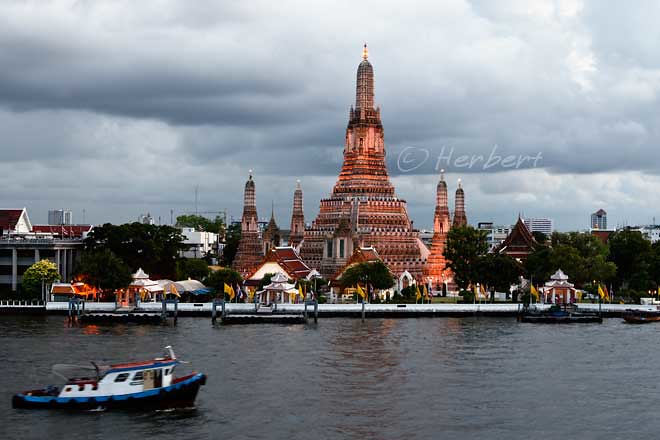
Location: Wat Arun, Bangkok, Thailand (13� 44' 38? N, 100� 29' 19? E)
Date: 24 June 2010, 6.35pm
Camera: Canon 400D with Canon 70-200/f4.0

Wat Arun is one of the best known landmarks of Bangkok. Situated on the west bank of the Chao Phraya River, it consists of a massive elongated prang (Khmer-style tower), and is surrounded by four smaller prangs. The prangs are decorated by seashells and bits of porcelain which had previously been used as ballast by boats coming to Bangkok from China. It is quite an interesting temple to visit but more stunning to look at from the opposite bank especially during sunset.

Technorati Tags: ,

Read more »

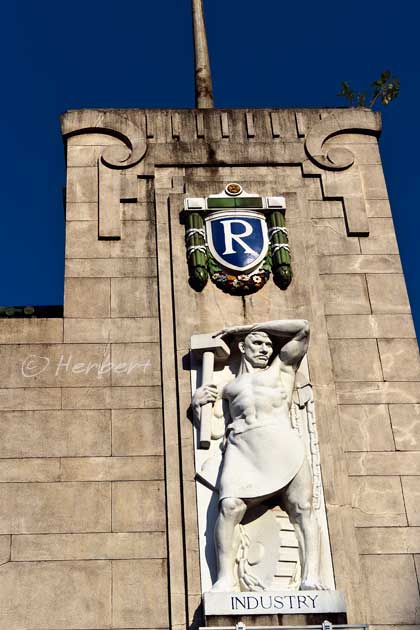
Location: Tanjong Pagar KTM Railway Station, Singapore (1� 16' 22? N, 103� 50' 17? E)
Date: 3 August 2010, 8.35am
Camera: Canon 400D with Sigma 17-70/f2.8-4.5

The Tanjong Pagar Railway Station located in Singapore is the terminus station of the Malaysia Railways (Keretapi Tanah Melayu). The land on which the station and the railway tracks in Singapore are situated is held by KTM on a 999 year lease. The station entrance has statues of white marble, allegories of Agriculture, Industry, Commerce and Transport. Inside the station, there are panel paintings of Malayan scenes: rice planting, rubber tapping, shipping activities, tin mining and so on. Singapore was part of Malaysia until they separated in 1965; when the border control was established after separation, both the Malaysian and Singaporean Customs, Immigration and Quarantine (CIQ) officers were stationed at Tanjong Pagar for immigration clearance of railway passengers even though the station is in fact deep at the other end of Singapore. In 1998 Singapore moved its CIQ functions for railways to Woodlands, which is at the point of entry into Singapore but Malaysia continues to maintain its CIQ functions at Tanjung Pagar. This created a situation whereby rail travellers leaving Singapore actually got checked into Malaysia (technically the station and the railway tracks are Malaysian territories) before they are cleared out from Singapore at Woodlands. This confused state has persisted for the last few years; as a result of a recent agreement between the governments, Malaysia will move its CQ to Woodlands as well by 1 July 2011. The Singapore Government has not being decided as to what will happen to the magnificent Railway Station after the relocation; I personally hope that the station architecture and sculptures will be kept intact.

Read more »

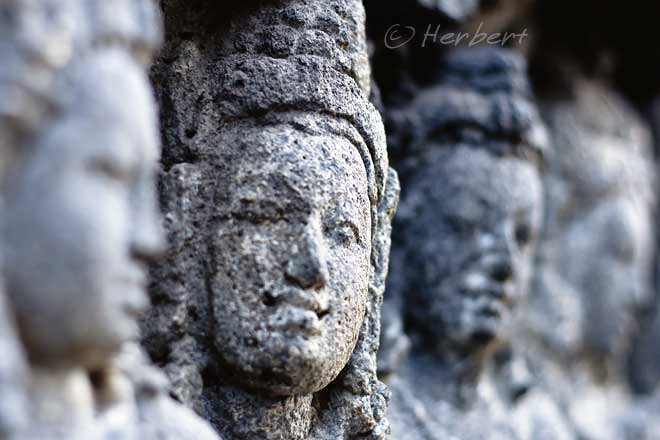
Location: Borobudur, East Java, Indonesia (7�36'29?S 110�12'14?E?)
Date: 21 July 2008; 9.40am
Camera: Canon 400D with EF 70-200/f4 IS L

Borobudur is under siege again, this time from nature. The continuing eruptions of Mount Merapi with its consequent release of huge amount of volcanic ash into the air are causing great concerns to the experts on the preservation of Borobudur. Apparently the statues and stupas of the monument are already coated by volcanic ashes 5 cm thick. The volcanic ashes are acidic and could cause irreparable damage to the monument as it embeds into the pores of the structures. Army of staff had been deployed to clean up the ashes and the authorities planned to cover the monument with a huge piece of plastic to prevent the ashes from contaminating the monument. However due to the size of the monument, the huge plastic sheet is only big enough to be used to cover the more important structures. Let�s wish them success.

Technorati Tags: ,

Read more »

Location: Borobudur, East Java, Indonesia (7�36'29?S 110�12'14?E?)
Date: 21 July 2008; 6.10am
Camera: Canon 400D with Sigma 17-70/f2.8-4.5

Mount Merapi is one of the most active volcanoes in Indonesia. It has just blown its top for the last 2 weeks and had claimed at least 150 lives. It is a beautiful volcano to look at when it is inactive especially as a backdrop to the fabulous Borobudur complex. This is diametrically different to what it looks like in the last few days with reports of ashes being thrown up 8 km into the sky. In fact the volcanic ashes even fell on Borobudur, 28 km away causing experts to fear that the acidic ash might damage the historic site. Though it is dangerous to live close to the volcano, the fertility of its soil resulting from the volcanic ashes, had attracted a huge population of farmers on its slope. I would venture to guess that after the ashes had settled, farmers will flock back to till on its slopes.

Technorati Tags: ,,
Read more »

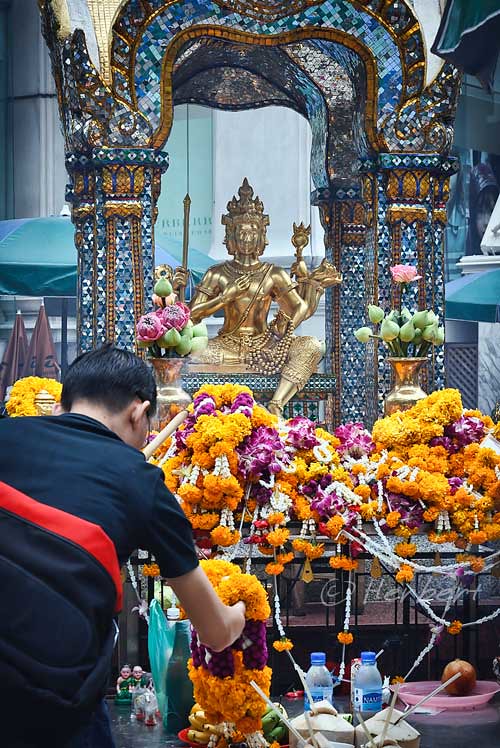
Location: Erawan Shrine, Bangkok, Thailand (13� 44' 49? N, 100� 32' 23? E)
Date: 28 October 2009, 11.05am

Camera: Canon 400D with Sigma 17-70/f2.8-4.5

The Erawan Shrine or San Phra Phrom is located diagonally opposite to Central World Shopping Mall in central Bangkok (part of the Central World Shopping Mall was burned down in the recent Red Shirt riots on 19 May 2010). The shrine is a well-known landmark in Bangkok, familiar to Thais and foreigners as thousands of devotees both Thai and foreigners pray at the shrine to seek blessings, fulfillment of dreams, success in personal lives and careers every day. The shrine was actually constructed to honor the 4-faced Hindu god, Brahma. However the shrine is popularly known to foreign visitors as the 4-face Buddha; which is incorrect as it is a not a Buddha. The shrine got its name, Erawan, from Brahma�s 3-headed elephant.

The gold plated plaster Brahma statue was smashed and destroyed on 21 March 2006 by a mentally ill man- he was beaten to death on the spot by two workers. The statue was replaced by metal one made of an alloy, nawaloha, consisting of nine metals including gold and silver. It remains as popular prayer shrine as its predecessor.

Read more »

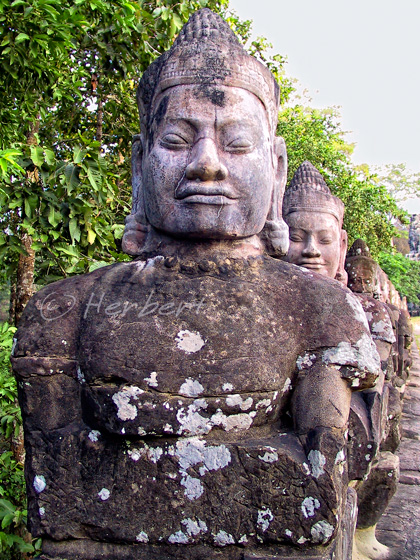
Location: Devas at South Gate, Angkor Thorn, Siem Reap, Cambodia (13� 26' 35.89? N, 103� 51' 34.85? E)
Date: 13 November 2002; 11.40am
Camera: Canon G1

Angkor Thorn is within the Angkor Wat complex of Siem Reap, so to speak. It is however, not actually part of Angkor Wat- it is in fact the last capital of the Khmer kingdom. Visitors to Angkor Wat will probably not bother to make such a distinction; it is after all part of a visit to Angkor Wat. There are several distinguishing features of Angkor Thorn but the row of statutes lining the length of the entrance to the South Gate is one of the more enduring. On the left are the gods while on the right are the demons, or asuras. They are supposed to be engaged in a tug-of-war holding on to the seven-headed serpent, or naga. This is a depiction of the Hindu creation myth, Churning of the Ocean of Milk, which is also shown on the bas-relief of Angkor Wat.

Read more »

Location: Marina Bay Sands, Singapore (1� 17' 4? N, 103� 51' 21? E)
Date: 18 August2009; 8.50pm
Camera: Canon 400D with Sigma 17-70/f2.8-4.5

As posted previously, Singapore is busy changing the face of its CBD plunging billions of dollars in building up and transforming the new Marina Bay area. One of the latest addition to its skyline and possibly considered a Singapore landmark is the new Marina Bay Sands Integrated Resort. This comprise of casino, hotels, shopping and conference facilities built and owned by the US-based Vegas Sands. It was opened in April 2010 though construction of a few of its sites is still in progress. This is supposedly the world�s most expensive standalone casino property. Foreigners are warmly welcome (to lose money) in the casino while Singapore Residents are discouraged to visit the casino by having to pay a hefty entrance fee of S$100 per visit.

Read more »

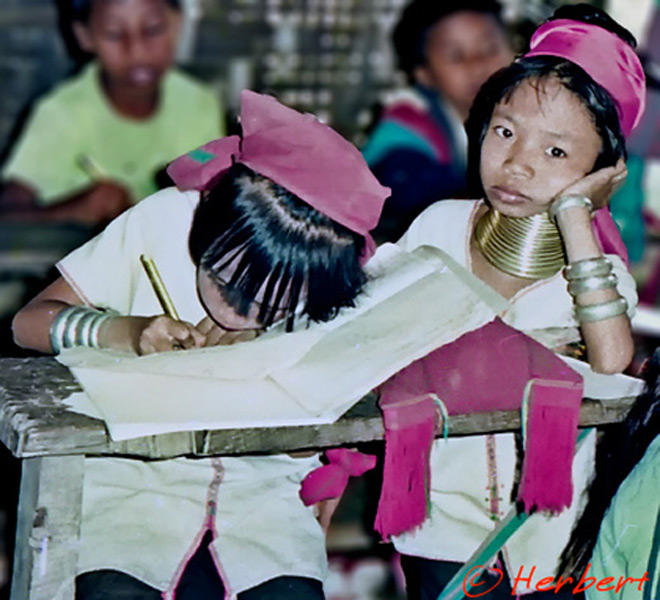
Location: Mae Hong Son, Thailand (19� 18' 14? N, 97� 58' 38? E)
Date: 13 August 1995; 2.10pm
Camera: (analogue) Olympus Mu on negatives and scanned

There is a sub-tribe of the Karen tribe living in the Kayah state in eastern Myanmar known as Padaung. They are more well-known as the �Long Neck� tribe as the women supposedly spot �long necks� (or giraffe women). They don�t actually have long necks � they wear rows of brass rings around their necks since young; these rings squash the vertebrae and collar bones as they grow older rather than stretching their necks. They also wear rings around their arms and legs. The reason that they do so is to look like a dragon- their ancestor. Legend has it that the Padaung people are the product of the impregnation by the wind of a beautiful long neck dragon. In Thailand, there are only a handful of Padaungs who are refugees fleeing the persecution by the Myanmese in the 1970�s. There live in the north, bordering Myanmar in villages which are dubbed �human zoo�. Such villages are set up as �tourist attractions� managed by Thais who also provide them protection. Tourists are brought to the village, paying an entrance fee, to see and photograph these ladies. There are allegations that the Padaungs are in fact imprisoned by the Thais that manage the villages and young girls are forced to adopt the ring tradition. While these may be so, the set up does provide the refugees a measure of certainty and protection from eviction (I am sure the �managers� are influential people) which they may not enjoy otherwise. Furthermore they do make a living from the visitors as well as selling whatever handicraft they made. I, personally cannot make a judgment if this is bad or otherwise.

Technorati Tags: ,,
Read more »

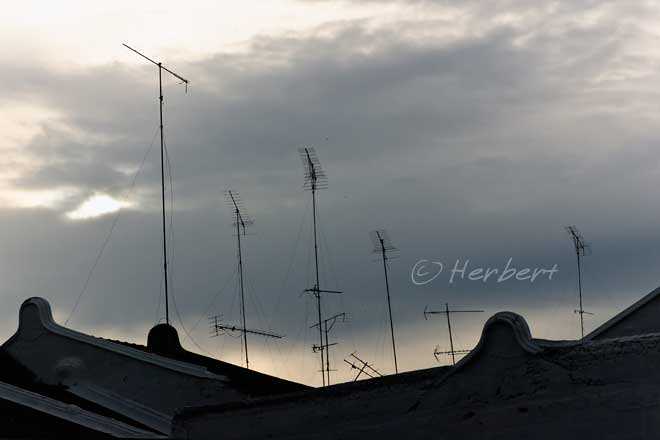
Location: Melaka, Malaysia (2� 12' 0? N, 102� 15' 0? E)
Date: 21 August 2010; 5.20pm
Camera: Canon 300D with kit lens

Melaka is one of Malaysia�s only 4 UNESCO Heritage Site and is the latest entry, together with Georgetown. I will deal with that in a later post. In towns south of Kuala Lumpur, one often sees tall aerials like these outside buildings. These special aerials are erected high above buildings so that the owners can receive TV broadcasts from far-away Singapore. Having such aerials give the owners access to (now) 6 more terrestrial channels on top of Malaysia�s own terrestrial channels without having to pay anything extra. This is quite attractive as Singapore�s programs are often newer than Malaysia�s. However one is likely to see less of such aerials as time goes by. These days in the age of satellite and cable TV�s, nearly all families in Malaysia subscribe to satellite TV. The contents of the such broadcasters are quite similar as they all offers the same few networks (at different prices between countries) such as ESPN, Star, HBO, BBC, Discovery etc.

Read more »

About

Nothing happens when you sit at home. I always make it a point to carry a camera with me at all times…I just shoot at what interests me at that moment. – Elliott Erwitt"
“I treat the photograph as a work of great complexity in which you can find drama. Add to that a careful composition of landscapes, live photography, the right music and interviews with people, and it becomes a style.” – Ken Burns