Content

Showing posts with label New Zealand. Show all posts

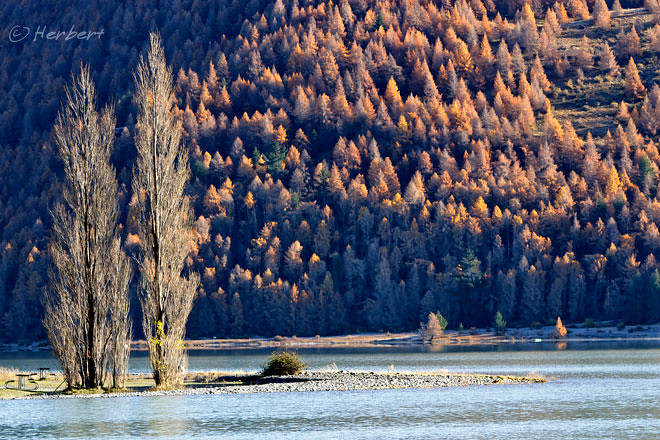
Location: Lake Tekapo, South Island, New Zealand (43� 53' 0? S, 170� 31' 0? E)
Date: 25 May 2009, 9.10am
Camera: Canon 300D with EF 70-200/f4 IS L

Lake Tekapo is one of the most pretty lake in the South Island of NZ. It is a popular spot for tourists on group/package tours. Every day one can see buses of tourists stopping off at the lakeside. However the tours normally only include a visit to the Church of the Good Shepherd on the shore of the lake; even though the lake has beautiful views across to the Southern Alps and beautiful forests along the shorelines. Furthermore there are great walks around the surrounding hills with views of the lake and its small islands from high. Most group/package tourists do not have the opportunity to enjoy such beauty. So if you are visiting Lake Tekapo, it is well-worth spending at least a night in the town.

Read more »

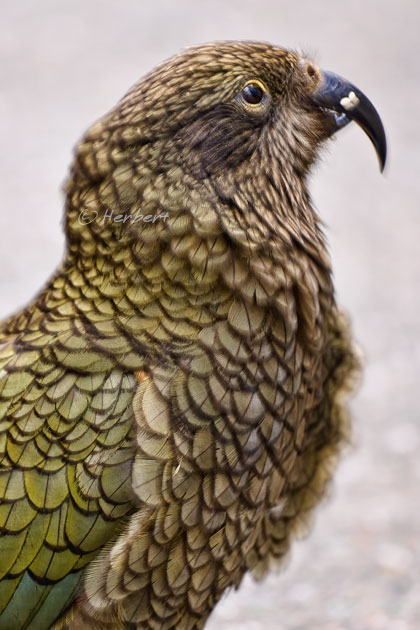
Location: Near Milford Sound, South Island, New Zealand (44� 38' 0? S, 167� 51' 0? E)
Date: 21 May 2009, 4.40pm
Camera: Canon 300D with EF 70-200/f4 IS L

Kea is one of a very few alpine parrots in the world, and its only habitat is the South Island of NZ. It is a fairly big bird, measuring around 45-50cm and weighs an average of 1 kg. It is well-known for their curiosity and intelligence- it will peck and carry away any unguarded items, investigate backpacks, boots and so on. It is attracted by prospects of food scraps and have known to pry apart rubber parts of cars. So the next time you meet a kea in NZ, do not get too friendly or close to it and watch out for any loose hanging items.

Read more »

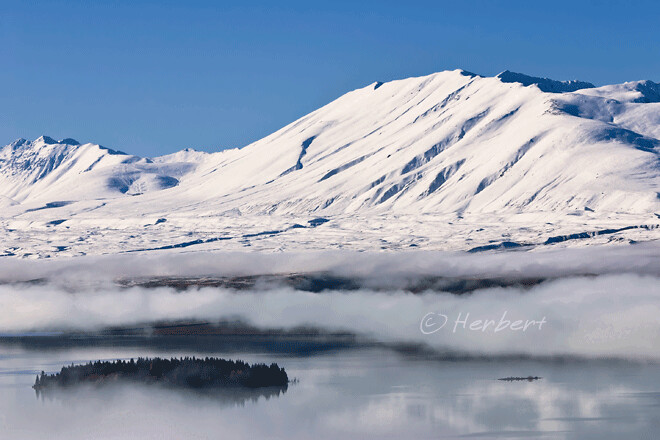
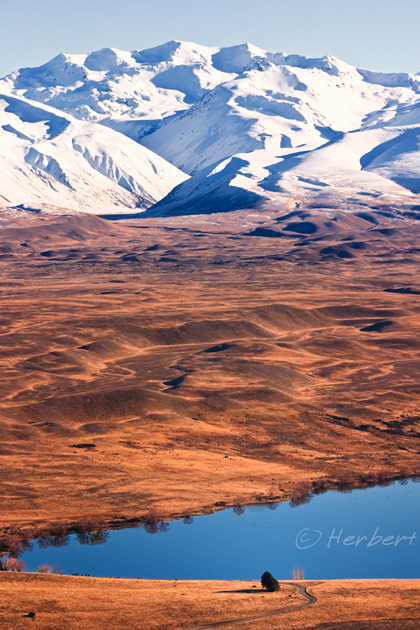
Location: Motuariki Island, Lake Tekapo, South Island, New Zealand (S43�56'22'' E170�31'36'')
Date: 26 May 2009, 11.10am
Camera: Canon 300D with EF 70-200/f4 IS L

The MacKenzie Country area od the South Island is an area of unparalleled beauty even in a country of so many spots of immense beauty. The most well-known spot around here is the scenic Lake Tekapo; but there are so many lakes around here to explore. All of these places are pretty as the snow-covered Southern Alps is always there as the backdrop. An example is Lake McGregor; another is this little tree-covered island sitting in the striking blue glacial-fed waters of Lake Tekapo. One of the best vantage point to enjoy the panorama is around Mount John Observatory.

Read more »

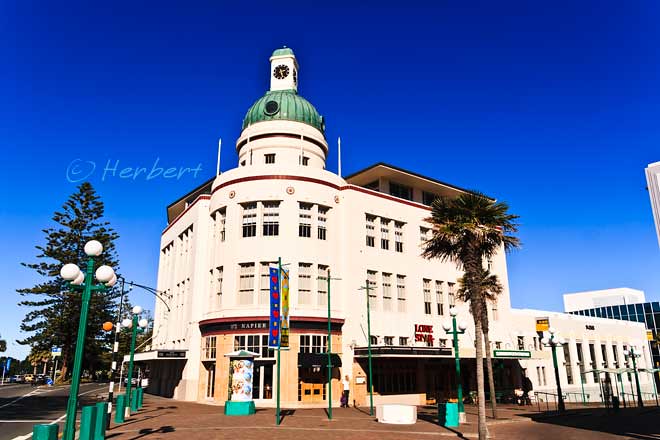
Location: Napier, New Zealand (39� 29' 0? S, 176� 55' 0? E)
Date: 16 May 2009, 9.40am
Camera: Canon 400D with Sigma 17-70/f2.8-4.5

Napier is one of the so-called �Twin Cities� on the eastern coast, Hawkes bay, of New Zealand; the other of the twin is Hastings. It is a major port for the region, shipping most of the North Island�s wool, citrus fruits and pulp and timber. The city is more well-known for its Art-Deco buildings. Napier was leveled by an earthquake in 1931 and was rebuilt in the style of the then-popular Art-Deco style. Though many of the buildings had been replaced by more modern designs, most of the Art-Deco buildings in the city center remained intact. Today these are the major tourist attractions though a statue akin to the Mermaid of Copenhagen, known as the Pania of the Reef, is much photographed. Honestly you don�t miss anything if you have not seen the statue.

Read more »

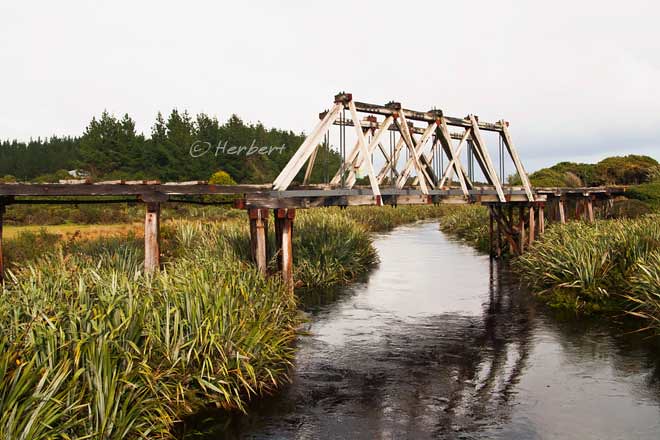
Location: Bruce bay, South Island, New Zealand (43� 36' 0? S, 169� 34' 0? E)
Date: 12 May 2009, 2.15pm
Camera: Canon 400D with Sigma 17-70/f2.8-4.5

Bruce bay is a windswept bay in the West Coast of the South Island. Here one can enjoy a sweeping coastal view of the Tasman Sea thrashing against the coast line. The coast is lined by elegant Rimu trees while the beach is largely deserted except for stones and driftwood. However it is rather spectacular in its sparseness and wild grandeur. The settlement here is old and was established mainly as a result of a Gold Rush in the 1860�s. Hence one can still see some old structures and elegant bridges still standing.

Read more »

Location: Arrowtown, South Island, New Zealand (44� 57' 0? S, 168� 50' 0? E)
Date: 24 May 2009, 3.10pm
Camera: Canon 400D with Sigma 17-70/f2.8-4.5

Arrowtown is an old gold mining town that has past its mining glory and more or less forgotten until about 20 years ago. Due to its proximity to the ever-popular Queenstown, it was discovered then, and since had become a favorite to package tour groups especially from Asia. The town is small and has some old buildings, which honestly are forgettable. The main street of old houses are refurbished and are now mainly shops selling souvenirs and so on. The only reason to go to Arrowtown is during autumn when the town is really beautiful with autumn glory. Otherwise don�t bother.

Read more »

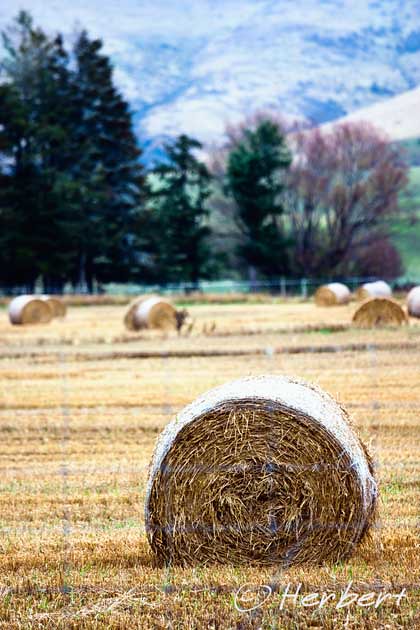
Location: Five Rivers, South Island, New Zealand (45� 37' 0S 168� 26' 60E)
Date: 18 May 2009, 2.15pm
Camera: Canon 400D with Sigma 17-70/f2.8-4.5

NZ is really a pretty place to visit. It has a wide variety of landscapes (ranging from beautiful serene beaches, wetland forests to volcanoes and alpine mountains) and weather conditions in a small landmass. Most of the country is still relatively wild and untouched by human. This is a result of both a conscious effort by the people of the country to preserve the land and its relative isolation. The sparse population is also a factor; well, sparse population of human anyway. According to the latest statistics, NZ�s human population is about 4.7 million but has 32 million of sheep and 5.8 million of cows. The sheep-to-human ratio used to be at a staggering number of 20 to 1; though it is still high in the South Island where the human population is lower but with more extensive sheep farming. Most visitors to NZ will spend their time in places such as Queenstown and Te Anau; however the least visited places are normally the most scenic, such as this small farming town in Otago.

Technorati Tags: ,
Read more »

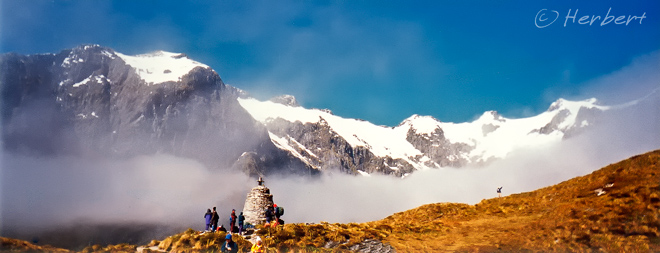
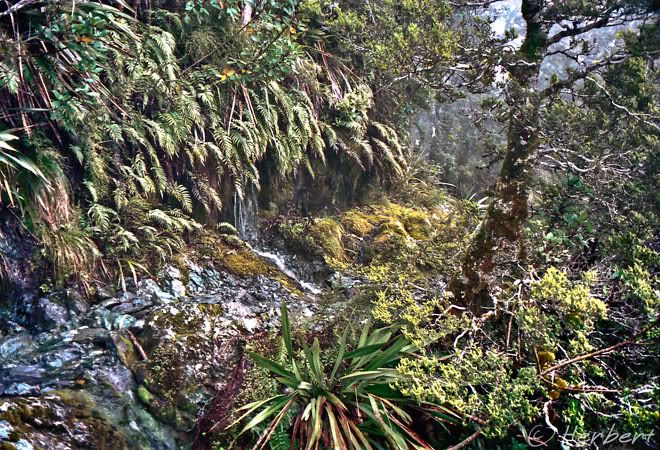
Location: Mackinnon Pass, Milford Track, South Island, New Zealand (44�48'7"S 167�46'13"E)
Date: 20 December 1996; 10.20am
Camera: (analogue) Canon EOS 500N on negatives and scanned

Milford Track is one of the most popular trails in NZ, popularly referred to as �The Finest Walk in the World�. It is 53.5km long and has some beautiful landscape along the trail of glaciated alpine mountains and lakes, waterfalls, rainforests and wetlands. The trail finishes at the Milford Sound, where trekkers will have to take a ferry to cross the sound. The peak season for walking the trail is in the summer months when access is highly regulated. Trekkers must complete the train in 4 days (and 4 days only, nothing more or less) in one direction. No camping is allowed- so trekkers must stay at the huts along the trail. The huts have bunks and supply of gas and water; trekkers have to bring their own sleeping bags, food and cooking utensils. A maximum of 90 trekkers can start on the trail each day and these 90 people must move on to the next hut every day; so one always see the same 89 other trekkers for the 4 day duration. The walk can be done easily independently as it is clearly marked. It is so popular during the summer months that it is not uncommon to have to book a place 12 months ahead! Milford Track is very spectacular especially after some rains with waterfalls everywhere as rainwater trails down the vertical cliffs.

Read more »

Location: Glenorchy Lagoon, Glenorchy, South Island, New Zealand (44�50'37.36"S 168�23'38.12"E)
Date: 21 May 2009, 4.40pm
Camera: Canon 400D with Sigma 17-70/f2.8-4.5

I have written before that Glenorchy is fast becoming very popular as the outdoor set for many adventure movies with emphasis on wild and beautiful landscape. It is also fast becoming known to adventure travelers as a playground. This will come as no surprise to Kiwis as they have long known the beauty, ruggedness and potential of this place- any trampers to the fabulous trails of Routeburn, Rees and Dart have to start their journey from here. It has snow-covered mountains, lakes, rivers as well as incredible wildlife and flora. I could spend weeks here without any problems- as long as I can also access my internet.

Read more »

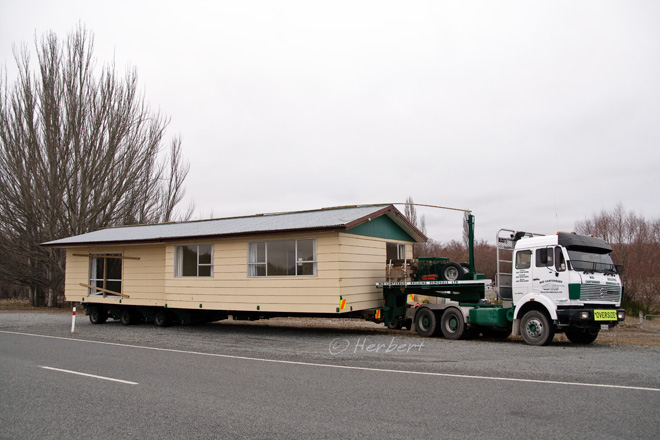
Location: Twizel, South Island, New Zealand (44� 15' 0? S, 170� 6' 0? E)
Date: 26 May 2009, 8.50am
Camera: Canon 400D with Sigma 17-70/f2.8-4.5

There is a distinct difference between dwellings in most parts of Asia and Australasia. In Asian cities most people lives in apartments, flats or condominium. The well-heeled will stay in landed properties such as what are known as semi-detached houses or bungalows. This is quite different from Australasia (and to some extent most of the Western cities) where low-rise landed-type properties still dominate. This is not to say that they are no high-rise apartments in these cities- there are, and more are being built to accommodate the increased urban population- except that single or double storey houses (what in Asia would have been known as bungalows) still predominates. Ironically two of the main reasons that there are more high-rise apartments in these cities are the increased number of Asians migrating to these cities as well as Asian companies- used to building such high-rise- are building more of these apartments to cater to the Asians. It is still very common in Australasian cities to buy the land and buy or build the house separately. In big cities such as Sydney and Auckland, it is not uncommon to see the whole house being moved on the road either by the owner shifting between properties or by the builder to the owner�s properties, like above. Traffic is always affected when this happens.

Read more »

Location: Mitre Peak at Milford Sound, South Island, New Zealand (44� 38' 0? S, 167� 51' 0? E)
Date: 23 May 2009, 5.30pm
Camera: Canon 400D with Sigma 17-70/f2.8-4.5

Mitre Peak at Milford Sound is one of the most photographed places in New Zealand. It was named so after the mitre headwear of Christian bishops (it is not nearly as perfect and pretty as another Mitre Peak in the Concordia area of Pakistan- I will post an article on that soon). At 1,692 metres, it is not a tall mountain but it sticks out as the surrounding mountains are lower. Most people would come to Milford Sound to take the Milford cruise on the sound itself. The cruse and the ride on the Milford Road to the Sound is like one of the must-do for any travellers to New Zealand and is normally done as a package from nearby towns such as Te Anau or Queenstown. However one can actually stay at the Milford Lodge, which is 5 minutes walk to the cruise centre (where this photo was taken). The Lodge has bunks and backpackers facilities at a cheap rate. One can only enjoy the tranquility and take some good sunset/sunrise photos by spending a night around here.

Read more »

Location: Lake McGregor, South Island, New Zealand (43�56'10.96"S, 170�28'12.71"E)
Date: 26 May 2009, 11.30am
Camera: Canon 400D with Sigma 17-70/f2.8-4.5

Lake McGregor is a small, very deep lake in the McKenzie Basin, next to the bigger and better known Lake Tekapo. The lakes are surrounded by mountains, with the year-round snow peaks of the Southern Alps to the north- which is the backdrop of the above photo. Lake McGregor is fabulous for fishing, mainly brown trouts. There are many small bays around the lake with shelf of shallow water that drops off into the depths. Fish cruise around these edges especially during the warmer months. However, there can be excellent fishing at all times of the year at the outlet channel that leads to Lake Tekapo. Apart from fishing, it is just another of many lakes around this part of New Zealand.

Read more »

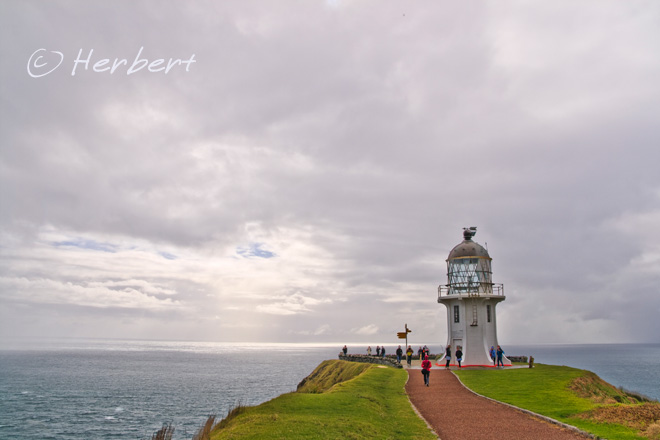
Location: Cape Reinga Lighthouse, New Zealand (34� 25' 43.64? S, 172� 40' 51.61? E)
Date: 10 May 2009, 10.30am
Camera: Canon 400D with Sigma 17-70/f2.8-4.5

Cape Reinga is a beautiful spot in the northern tip of New Zealand. It is commonly been mistaken (even by reputable guidebooks) as the northernmost tip of NZ- that honour actually belongs to Surville Cliffs which lies 30km to the east of here. Cape Reinga is often windy, being an exposed sliver of land protruding into the meeting of the Tasman Sea and Pacific Ocean. The cape is sacred to the Maoris as they believed that it is the point where the spirits of the dead enter the underworld. It is popular with tourists. One can drive to the cape easily (the nearest town, Kaitaia, is about 100 km south); however most tourists prefer to take a day tour as this normally include a drive on and along the fabulous 90-Mile Beach which is unsuitable for vehicles.

Read more »

Location: Richardson Range, Kinloch, Otago, New Zealand (44� 51' 0" S, 168� 20' 0" E)
Date: 22 May 2009, 11.30am
Camera: Canon 400D with Sigma 17-70/f2.8-4.5

Kinloch is a very small settlement situated at one end of Lake Wakatipu in the South Island of New Zealand. It is directly at the opposite bank of the lake to another small town, Glenorchy. Glenorchy had quite a high profile in the last few years as the site of no less than four Lord of The Rings film shooting locations. Many of the outdoor locations of the movie "X-Men Wolverine" were also shot around here. One can quickly understand the popularity of this area for such locations after spending a couple of hours driving or walking the vicinity. The scenery is one of sheer stark beauty with snowy peaks of both the Richardson and Humboldt Ranges framing the west and east shores of the lake, fed by both the Dart and Rees River. However, drivers have to be always on the alert for this road sign- 1-way bridges, give way- that are common in the South Island.

Read more »

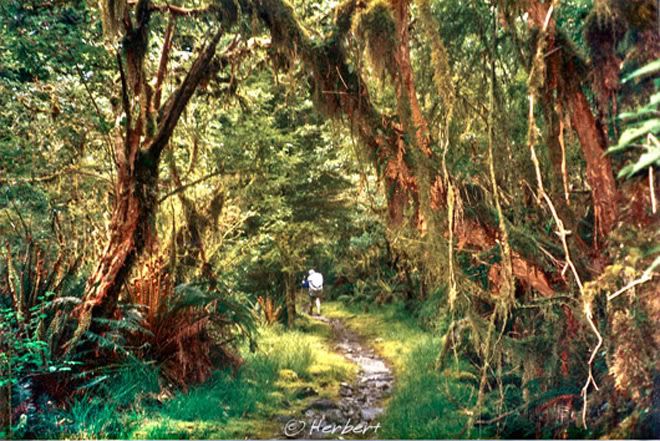
Location: Milford Track, South Island, New Zealand (44� 40' 60 S, 167� 54' 0 E)
Date: 22 December 1996; 1.20pm

Camera: (analogue) Canon EOS 500N on negatives and scanned

I have combed my collection of NZ photos -I lived there for 10 years- but could not find too many of the old analogs that looks good even after digital manipulation. Even those taken on my trek in Routeburn about 10 years ago could not make the mark- the weather was predominantly wretched during that trek. Only those on the Milford Trek are acceptable.

Southwest NZ which encompass the Fiordland National Park is one of the wettest places in the world and the rain contributes towards its beauty. Apart from tumbling waterfalls big and small (there are heaps of small ones in the Milford Track after rain), the rain nurtures a temperate rainforest of beech and countless ferns and all sorts of mosses. It is beauty that can only be appreciated by hardwork- trekking the forests.

Technorati Tags: ,
Read more »

Location: Milford Track, South Island, New Zealand (44� 40' 60 S, 167� 54' 0 E)
Date: 23 December 1996; 3.20pm
Camera: (analogue) Canon EOS 500N on negatives and scanned
Perhaps the most well-known trekking destination in NZ, Milford Track is a 4 day track that can only be walked from one direction, from Glade Wharf to Milford Sound between late October and late April. At any one time there are a maximum of only 160 trekkers (or trampers as they are called in NZ and Australia) on the track- a maximum of 40 independent trekkers is allowed to start the trek every day. This means that at any time over the duration of the trek, a trekker will only meet the same 39 other trekkers who started on the same day as him/her.
Milford Track deserves its reputation as one of the most beautiful independent tracks in NZ. One can see beautiful lush valleys of beech, flowers, Moses, lichens as well as alpine lakes and tussocks, snow peaks, beautiful waterfalls over the 4 days of relatively easy walking. The scenery is even more spectacular after rain as waterfalls just tumble down the walls of the whole valley. However there are a couple of myths about Milford Track.
Myth number 1: one need to book 6 months to a year ahead to get on the track. Milford Track is popular but it is still possible to get on the track if one have a few flexible dates especially if one is trekking alone or with just another person. There are normally some vacancies on most days- just contact the Department of Conservation to check or check and book online here.
Myth number 2: it is impossible to take a bad photo of Milford Sound (of which Milford Track is located). Whilst the Track is amazingly beautiful in every way, one still needs the cooperation of Nature. Milford Sound is one of the wettest places on Earth and so one's photo opportunity is quite often wrecked by the trustworthy showers. Even at the Mackinnon Memorial snow peaks are often shrouded in mist.
Read more »

About

Nothing happens when you sit at home. I always make it a point to carry a camera with me at all times…I just shoot at what interests me at that moment. – Elliott Erwitt"
“I treat the photograph as a work of great complexity in which you can find drama. Add to that a careful composition of landscapes, live photography, the right music and interviews with people, and it becomes a style.” – Ken Burns