Content

Showing posts with label Africa. Show all posts

Location: Somewhere on the road in Namibia
Date: 19 April 2001; 5.45pm

Camera: (analogue) Canon 500N with slides and scanned

I have always been fascinated by the photos of African skies. There are such a variety- always either beautifully layered with clouds or blood-red sunsets tanning the landscape. It must be its weather system- large areas of dryness with seasonal deluge. In any case, I was not disappointed during my swing across the southern part of the continent as I have seen beautiful sunsets, misty mornings and many instances of the sun hiding shyly behind clouds. The sky is truly one of the attractions of Africa.

Read more »

Location: Matobo national Park, Zimbabwe, Africa (20� 33' 0? S, 28� 30' 28.8? E)
Date: 29 April 2001; 4.15pm
Camera: (analogue) Canon 500N with slides and scanned

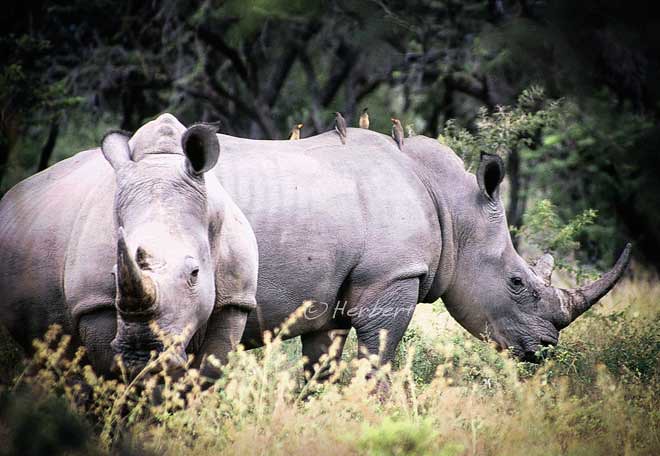
Rhinoceros poaching has reached an all-time high. In 2010, 333 rhinos were slain by poachers for their valuable horns, compared to 122 in 2009. Poaching is driven mainly by the demand of the rhino horns in Asia for its perceived medicinal properties. However extensive research and analysis have established that the horns do not contain any medicinal or aphrodisiac effects. One would appreciate the attractiveness of poaching when today weight-for-weight, rhino horn is more valuable than gold. Most of the rhinos poached are white rhinos- which are considered a near-threatened species- but a few endangered black rhinos were also slain. Stopping the poaching has become more difficult as poachers employ high-tech methods such as helicopters, prescription tranquillizers, night-vision goggles and high-powered rifles. Conservationists and game park owners have sometimes resorted to extreme measures to protect the rhinos such as poisoning the rhino horns with cyanide. Anyone consuming a poisoned horn will be poisoned by the cyanide.

Read more »

Location: Twyfelfontein Rock Art, Namibia (20� 35' 26? S, 14� 22' 20? E)
Date: 18 April 2001; 2.15pm
Camera: (analogue) Canon 500N with slides and scanned

When someone mentioned Rock Art, invariably one would think of ancient paintings and engraving by people who lives thousands of years on rocks. Rock Art has been discovered all over the world- mostly by ethnic inhabitants of the place concerned. Hence there are Aborigine, Maori and plenty more in Europe, India, Central America and so on. One common theme of such Rock Arts is that they normally depict animals of the time or motifs and hand prints. Most of such sites that have been discovered around the world are now listed as UNESCO Heritage Sites. Twyfelfontein in Namibia is one of the most well-known Rock Art site in Africa. There are a few thousands of such rock engravings in Twyfelfontein, many of them in relatively good condition; no doubt helped by the dry weather condition in that area. Most of the engravings are chiseled into the sandstones and are depictions of animals such as lions, giraffes, buffalos, wildebeests and so on.

Technorati Tags: ,,
Read more »

Location: Victoria Falls, Zimbabwe, Africa (17� 55' 28? S, 25� 51' 24? E)
Date: 5 April 2001; 4.20pm
Camera: (analogue) Canon 500N with slides and scanned

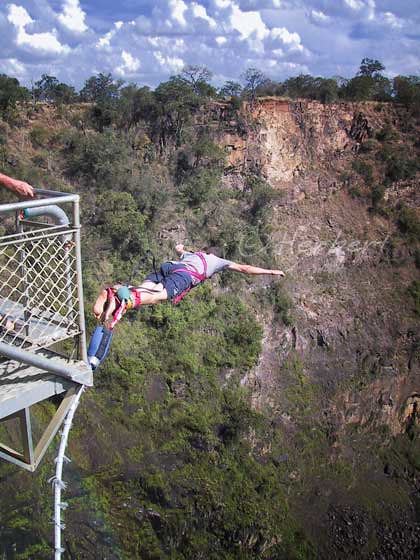
Bungy jumping had come a long way and is now such a common �adventure� activity that one sees such a set-up in most tourist spots that has a certain level of height such as rivers, lakes, bridges and buildings. It is quite an experience to jump off a bridge or whatever it may be. The moment of truth is actually when one stares out into the open space and height. It takes some courage for one to decide to leap. I have seen many people who wanted to try bungy jump to freeze when standing at the edge of the bungy platform and either have to be gently nudged or simply retreat to gather their courage for a jump at another time. In any case, bungy jumping is an experience that I would encourage. However if you do want to bungy, it is very important to do so with a reputed operator- it does not matter if it cost a little more- safety is of utmost importance.

Read more »

Location: Victoria Falls, Zimbabwe, Africa (17� 55' 28? S, 25� 51' 24? E)
Date: 6 April 2001; 8.20am
Camera: (analogue) Canon 500N with slides and scanned

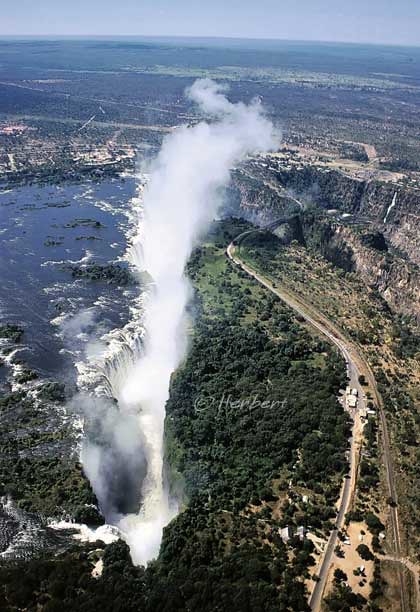
The Mosi-oa-Tunya (meaning �Smoke that Thunders�), better known as the Victoria Falls lies on the border between Zimbabwe and Zambia in southern Africa. The fall is neither the highest nor widest in the world; but it is claimed to be the largest sheet of falling water in the world by its measurement of 1,708m width and 108m height. The fall is formed when the calm waters of the Zambezi River plummets in a single vertical drop over its entire width. It is an amazing sight and sound as one gets close to the fall; in fact one can see the mists and sprays from the falling waters and hear the thundering noise from afar. The sprays can reach quite far on any windy days and it is advisable for any visitors to don a raincoat. However the best way to see the falls is from the air, on a helicopter- an expensive option. This is because from the ground level, one can only see a sheet of falling water without any of the majesty and presence of its depth and width.

Read more »

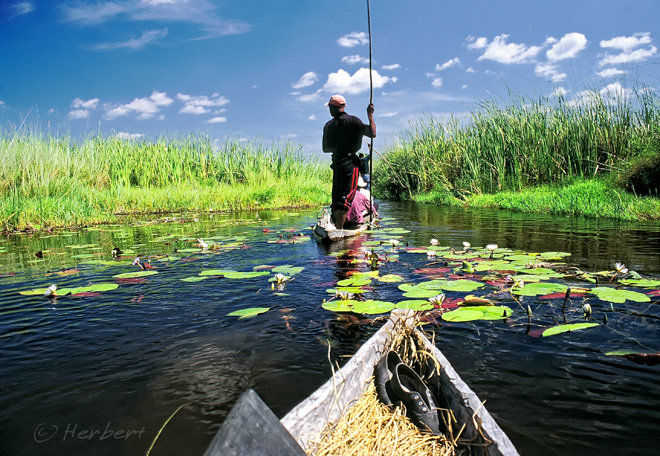
Location: Okavanga Delta, Botswana, Africa (19� 15' 0? S, 22� 45' 0? E)
Date: 23 April 2001; 11.25am
Camera: (analogue) Canon 500N with slides and scanned

Okavango Delta is the world�s largest inland delta. The delta is irrigated by the Okavango River which originates from Angola, where it is known as the Cubango River. The river has no outlet to the sea but empties into the Kalahari Desert and irrigating the desert in the process. The delta is flooded for about 3 months every year between June and August, curiously during Botswana�s dry winter months. The reason is that the river water comes from summer rains in Angola that takes about 5 months to reach the Okavango Delta. When the delta is flooded, it swells to at least 3 times its permanent size. During this time, the delta is a magnet for animals, creating one of Africa�s greatest concentrations of wildlife. Islands, the majority of which began as termite mounds, can disappear completely, being consumed by the flood. However, the water would disappear relatively quickly through evaporation and transpiration from the leaves of plants as a result of the high temperature in the desert. A major means of transport during the flood is by poling a mokoro, a traditional dug-out canoe made from an ebony or sausage tree log, like that in the photo. Since both the ebony and sausage trees are now protected, mokoros are now made from fibreglass.

Technorati Tags: ,,,
Read more »

Location: Zambezi River, Zambia, Africa (17� 55' 28? S, 25� 51' 24? E)
Date: 3 April 2001; 5.50pm
Camera: (analogue) Canon 500N with slides and scanned

The 4th longest river of Africa, the Zambezi originates from Zambia and flows through 4 other countries before emptying into the Indian Ocean. The river changes in several places along its course from placid flow in sandy plains to annual flood plains as well as tumbling rivers of falls and rapids. The Zambezi River is widely used by wildlife and humans alike. Apart from being a source of water for both, it is also an important source for transportation, irrigation, tourism and hydropower.

Read more »

Location: Zambezi River, Zimbabwe, Africa (17� 55' 28? S, 25� 51' 24? E)
Date: 5 April 2001; 6.20pm
Camera: (analogue) Canon 500N with slides and scanned

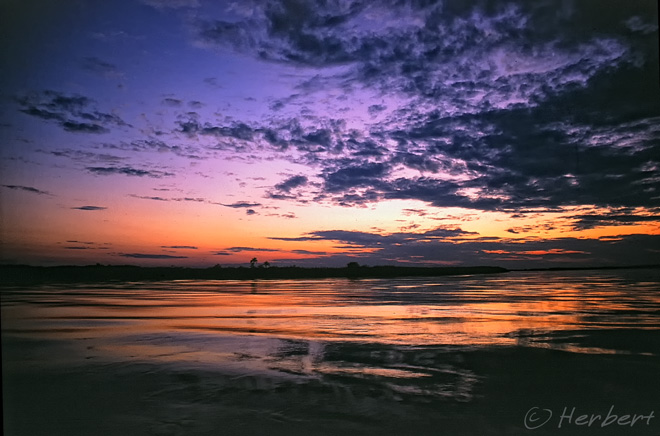
The Zambezi River is the 4th longest river in Africa and forms part of the border between Zambia and Zimbabwe. Around here it drops and forms the spectacular Victoria Falls, the largest waterfall in the world. At its widest single drop, the river plummets at its width of 1,708 meters with incredible power, forming the First Gorge. At other sections of the river before the falls, it is a mainly calm , shallow and slow-flowing river; just like the section in this photograph.

Read more »

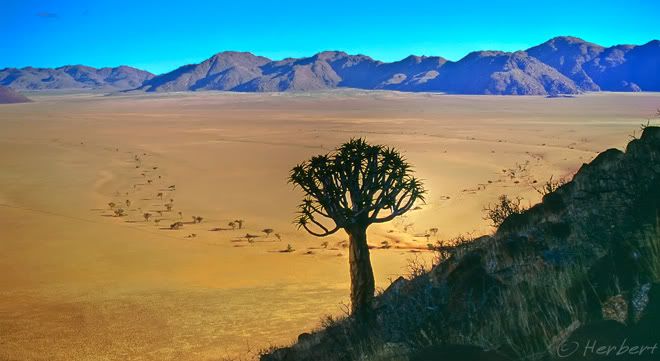
Location: Near NamibRand Nature Reserve, Namib Desert, Namibia (25� 2'8.68"S 16� 5'41.73"E)
Date: 14 April 2001; 4.25pm
Camera: (analogue) Canon 500N with slides and scanned
Quiver Trees are also known as kokerboom, and are a species of aloe indigenous to South Africa, specifically in the Northern Cape region, and Namibia. Its name was derived from the common practice of the Kalahari San Bushmen of hollowing out the tubular branches and bark to make quivers for their arrows. These trees are very rugged and are among the very few plants that survive in the dry, avid desert.

Read more »

Location: Etosha National Park, Namibia (18� 31' 12? S, 16� 16' 30? E)
Date: 19 April 2001; 4.25pm
Camera: (analogue) Canon 500N with slides and scanned

Etosha National Park was the largest game reserve in the world when it opened. However as a result of political changes, it is now only a quarter of its original size. Despite that, there is a bewildering range of animals which tend to concentrate around the waterholes within the park. The dry season is the best season to see these animals as they come to drink at the waterholes.

Read more »

Location: Spitzkoppe, Namib Desert, Namibia (21� 49' 29? S, 15� 11' 39? E)
Date: 18 April 2001; 6.25am
Camera: (analogue) Canon 500N with slides and scanned

The Spitzkoppe is often described as the "Matterhorn of Namibia". The granite massif is situated in the Namib Desert, with the highest outcrop at about 1,784m above sea level. It is not the highest mountain in Namibia but maybe, the most well-known due to its striking outline and its dramatic rise from the endless, dry surrounding plains. The highest peak is about 700m above the floor of the desert below and the island of mountains can be seen from far away.

The granite pile harbours many different unique flora and fauna as well as ancient Bushmen artworks. There are also many beautiful arches and rocks with strange cavities formed from wind and water erosions over the millennia.

Read more »

Location: Namib Desert, Namibia (24� 44' 0? S, 15� 22' 0? E)
Date: 15 April 2001; 2.15pm
Camera: (analogue) Canon 500N with slides and scanned

A storm cloud is coming at the Namib Desert, in the Namib-Naukluft National Park!! The average annual rainfall in the desert ranges from 5 to 80 mm and yet we have to be in the desert on the day when nearly half the year's rainfall fell. Locals were really excited about the rain on that day- it is extremely rare for such a high volume of rainfall in a day but we were not amused! We came to the Namib Desert to see the desert and the sand dunes not to be washed and chased away by the rain! Such is life.

Technorati Tags:
Read more »

Location: Oryx or gemstock at Etosha National Park, Namibia (18� 31' 12? S, 16� 16' 30? E)
Date: 19 April 2001; 4.15pm
Camera: (analogue) Canon 500N with slides and scanned

Etosha National Park is one of the best Fame Reserve in the southern part of Africa. It is part of the Kalahari Pan which was a lake that has dried up thousands of years ago. There are quite a number of waterholes within the pan that attracts a tremendous diversity of wildlife especially in the cooler months. It is also quite unique as it has a long fence along its 850 km boundary to control the spread of diseases among the animals.

Technorati Tags: ,,
Read more »

Location: Boulder's Beach, Simon's Town, South Africa (34� 11' 20? S, 18� 26' 19? E)
Date: 7 April 2001; 3.15pm
Camera: (analogue) Canon 500N with slides and scanned

This beach is at a place named Simon's Town near Cape Town on the eastern side of Cape Peninsula. It has a colony of Jackass Penguins since 1985 that has grown to about 1,000 strong. Jackass Penguins are African penguins- so-called for the donkey-like braying sounds they make when on land. Like pandas, penguins are much loved, in no small part played by their comical movements. These penguins are not shy or afraid of humans and are quite happy with humans getting close. However it seems they may have to be careful, lest they may be "raped" by other animals; just like the attempted "rape" of their cousin by an Antarctic seal (see 'Sex pest' seal attacks penguin).

Read more »

Location: Near Wilderness camp, Palmwag, northwest Namibia (19�52'9.00"S 13�56'8.00"E)
Date:
18 April 2001; 7.15pm
Camera: (analogue) Canon 500N with slides and scanned

North of the Huab River in remote northwest Namibia is an arid landscape of seemingly nothingness but a road cutting through it. The area is divided up into large private concessions and Palmwag is one of them.

Palmwag is quite an amazing place teeming with all sorts of wildlife within the concession including the black rhino which the camp specialises in approaching on foot. However we were there specifically to look for desert elephants.

Technorati Tags: ,
Read more »

Location: Near NamibRand Nature Reserve, Namib Desert, Namibia (25� 2'8.68"S 16� 5'41.73"E)
Date: 14 April 2001; 4.15pm

Camera: (analogue)
Canon 500N with slides and scanned
A huge swath of Namibia is the Namib Desert. Its significance can be gauged from the fact that Namibia's name is derived from the name of the desert. Namib means vast in the local Nama language. It is indeed a vast land of rolling orange dunes, including some of the highest in the world, some 300meters high, around Sossusvlei.
The scenery may be amazing but the local wildlife and flora is just as fascinating. Animals, insects and plants have adapted to this arid and at first sight, inhospitable landscape in distinctly unique, incredible and beautiful fashion. This include the acacia plant photographed here.
Read more »

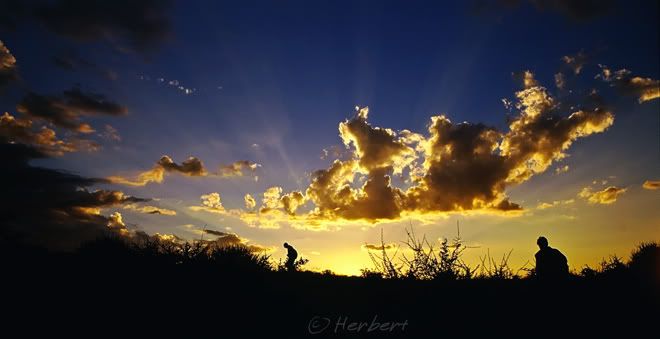
Location: Maun near Okavango Delta, Botswana (19� 58' 60 S,23� 25' 0 E)
Date: 22 April 2001; about 7pm

Camera: (analogue) Canon 500N with slides and scanned
Maun is a small town that has become the safari capital of Botswana. The main reason is its proximity to the various camps north of town � Island Safari Lodge, Crocodile Camp and Okavango River Lodge. Sunsets are quite beautiful in this part of Africa.
Technorati Tags: ,,,
Read more »

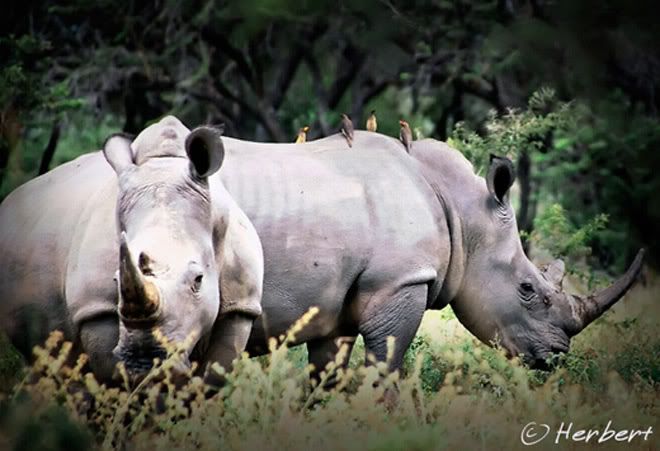
Location: Matobo National Park, Zimbabwe, Africa (20�30'S 28�30'E)
Date: 29 April 2001; 4.20pm
Camera: (analogue) Canon 500N with slides and scanned

Matobo National Park is more well-known for its dramatic landscape of smooth whale-back garnite hills and ancient rock paintings. However also within its boundaries live some of the less than 2,500 black rhinoceros that is believed to be still alive today. Black rhinoceros is a highly endangered species (in fact one of its subspecies is believed to be extinct) often being poached for its horns. The name is actually a misnomer as the animal is more white-grey than black. For some reasons, birds like to hitch a ride on rhinos' backs.
Read more »

About

Nothing happens when you sit at home. I always make it a point to carry a camera with me at all times…I just shoot at what interests me at that moment. – Elliott Erwitt"
“I treat the photograph as a work of great complexity in which you can find drama. Add to that a careful composition of landscapes, live photography, the right music and interviews with people, and it becomes a style.” – Ken Burns